
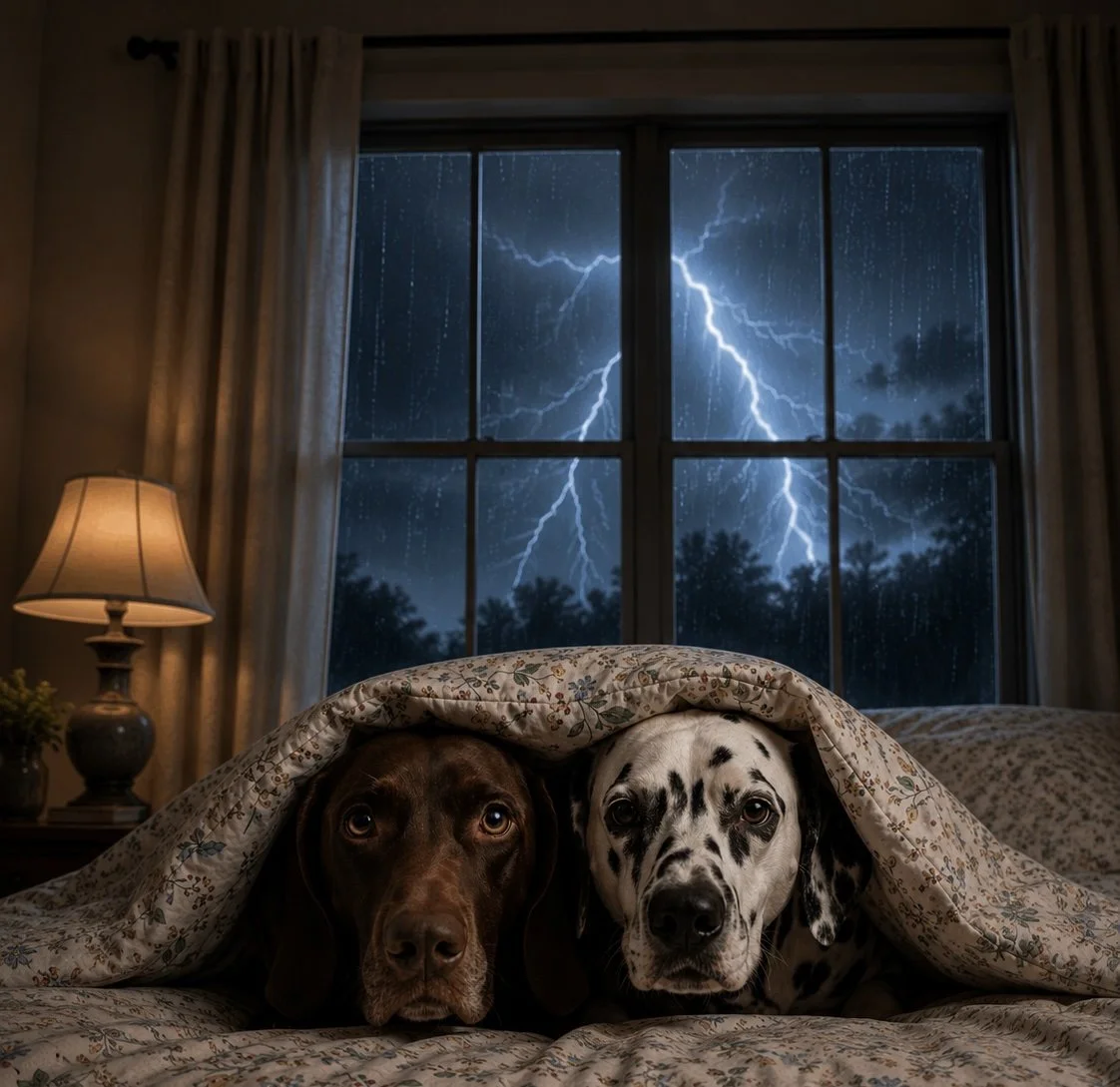
what can you do as a dog owner during a thunderstorm?
For some dogs, a thunderstorm means little more than a rainy afternoon. For others, thunder, lightning, wind, and changes in the environment can trigger significant fear.
A frightened dog may tremble, pant, hide, bark, pace, or attempt to escape. Understanding how to respond can help reduce immediate stress and prepare you for future storms.
Why Are Some Dogs Afraid of Thunder?
Thunderstorms involve more than loud sounds. Sudden changes in noise, flashes of lightning, wind, and other environmental cues may contribute to a dog's fear.
Some dogs develop noise sensitivities gradually, while others appear fearful after a single frightening experience. Individual temperament and previous experiences may influence how a dog responds.
Signs Your Dog Is Afraid of a Storm
Watch for:
Trembling or excessive panting.
Hiding under furniture.
Pacing or repeatedly seeking attention.
Whining, barking, or drooling.
Refusing treats or food.
Scratching at doors or attempting to escape.
A dog that becomes frantic or risks injuring itself needs additional support beyond ordinary reassurance.
Five Ways to Help During a Thunderstorm
1. Prepare a comfortable retreat.
Choose an interior room or another quiet area away from windows. Provide familiar bedding and allow your dog to choose whether to hide or remain near you.
2. Reduce noise and visual stimulation.
Close windows and curtains. A fan, television, or other steady background sound may help soften the contrast of sudden thunder.
3. Stay calm and reassuring.
Speak gently and offer comfort if your dog seeks it. You do not need to ignore a frightened dog; calm reassurance is appropriate.
4. Keep your dog safely indoors.
Fearful dogs may bolt unexpectedly. Ensure doors and gates are secure, identification is current, and outdoor trips are supervised.
5. Offer a familiar activity if your dog is receptive.
Some dogs enjoy a favorite toy, food puzzle, or treat. Do not force interaction if your dog is too distressed to engage.
Can You Train a Dog to Tolerate Thunder?
Behavioral techniques may help some dogs, but they generally require planning outside the most stressful moments.
Gradual desensitization involves exposing a dog to a controlled version of a trigger at a low intensity and pairing it with positive experiences. The process should progress slowly enough that the dog remains comfortable.
Severe noise fear may require help from a veterinarian or qualified behavior professional. Never expose a frightened dog to intense thunder recordings in an attempt to make it “get used to” the sound.
What About Calming Supplements?
Certain supplements are marketed to support relaxation, but their effects vary and they cannot be expected to eliminate thunderstorm fear in every dog.
Dr. Butzer's Best Calming Support Soft Chews contain a blend of ingredients intended to support relaxation. Review the product information and directions and ask your veterinarian whether the formula is suitable for your dog.
If storms trigger panic, self-injury, or escape attempts, discuss a storm-specific management plan with your veterinarian. Prescription medication may be appropriate for some dogs.
Prepare Before the Next Storm
Keep your dog's safe space ready, monitor weather forecasts, and plan bathroom breaks before severe weather arrives when possible. If your dog has a history of severe fear, speak with your veterinarian before storm season rather than waiting for the next episode.
A Calmer Approach to Storm Season
Every dog responds differently to thunderstorms. A secure environment, patient reassurance, and an individualized plan can help make difficult weather events more manageable.
Explore Dr. Butzer's Best Calming Support Soft Chews as one potential component of a broader wellness routine.
This article is for educational purposes only and is not a substitute for veterinary advice.