
Dog Supplements: What to Look for Before Choosing One
From skin and coat products to digestive support and mobility formulas, there are many supplements available for dogs. With so many choices, it can be difficult to determine which products are worth considering and whether your dog needs one at all.
The best starting point isn't the most popular product or the longest ingredient list. It's understanding your dog's individual needs and choosing products thoughtfully.
At Dr. Butzer's Best, we believe pet parents should have clear information to help them make informed decisions. Here's what to know before adding a supplement to your dog's routine.
Does your dog need a supplement?
Not every dog needs a daily supplement. Dogs eating a complete and balanced diet appropriate for their life stage may already receive the nutrients they require.
Supplementation may be considered when there is a specific nutritional need, a veterinary recommendation, or a clear purpose for the product. However, a supplement isn't automatically beneficial simply because it contains vitamins, minerals, herbs, or other familiar ingredients.
Start by asking:
What concern am I trying to address?
Is my dog eating a complete and balanced diet?
Could the symptoms indicate an underlying medical problem?
Has my veterinarian recommended a particular ingredient or product?
Could the supplement interact with food, medication, or another supplement?
If your dog has persistent symptoms, investigate the cause instead of relying on a supplement to manage them without guidance.
Five things to look for in a dog supplement
1. A clear purpose
A product should explain what it is designed to support. For example, a skin-and-coat supplement has a different purpose from a digestive supplement or a product intended to support mobility.
Be cautious of products that claim to solve many unrelated problems at once or promise dramatic results.
2. Transparent ingredient information
Read the full label rather than relying only on the front of the package.
Look for ingredient names, amounts where provided, feeding directions, intended species, age guidance, and warnings. If an ingredient is unfamiliar, ask your veterinarian what it does and whether there is evidence to support its intended use.
3. Appropriate dosing instructions
The right amount depends on the formula, the dog's weight, and sometimes age or medical status.
Never assume that two products with similar names can be given in the same amounts. Avoid combining supplements with overlapping ingredients without checking the total intake with your veterinarian.
4. Quality and manufacturer transparency
Look for a manufacturer that provides clear product information and can answer reasonable questions about formulation, quality controls, and intended use.
Independent quality evaluations, when available, can provide additional information about identity, purity, and whether a product contains the amounts stated on its label. A quality evaluation does not guarantee that a product is suitable for every dog or that it will produce a particular result.
5. Veterinary guidance when needed
Veterinary input is particularly important if your dog is a puppy, is pregnant or intended for breeding, has a chronic medical condition, takes medication, or is already receiving a therapeutic diet.
Your veterinarian can help you decide whether a supplement is necessary, which ingredients are appropriate, and what signs to monitor after starting it.
Different types of dog supplements
Understanding the purpose of each category can help you narrow your search.
Skin and coat supplements
These products may contain fatty acids, vitamins, or other ingredients intended to support normal skin function and coat condition.
If your dog has persistent itching, hair loss, redness, sores, or recurring ear problems, seek veterinary advice. Skin symptoms can have many causes and may require specific treatment.
Digestive supplements
Digestive products may contain probiotics, prebiotics, enzymes, or other ingredients intended to support normal gastrointestinal function.
Different ingredients serve different roles, and evidence varies by formulation. Ongoing vomiting, diarrhea, appetite changes, or weight loss should be evaluated by a veterinarian.
Mobility supplements
Mobility products may include ingredients intended to support joint health. Evidence varies by ingredient, and supplements do not replace a diagnosis or treatment plan for arthritis or orthopedic disease.
If your dog develops stiffness, limping, reluctance to move, or difficulty standing, arrange a veterinary assessment.
Calming supplements
Calming products may contain ingredients intended to support relaxation during stressful situations. Their effects vary, and they should not be considered a guaranteed treatment for anxiety.
Persistent fear, separation-related distress, destructive behavior, or escape attempts may require veterinary and behavioral support.
Vitamins and minerals
More isn't necessarily better. Giving extra vitamins or minerals to a dog that already receives adequate nutrition can be unnecessary and, in some cases, harmful.
Avoid supplementing individual nutrients without understanding the dog's diet and needs. Your veterinarian can help determine whether a deficiency or other concern warrants supplementation.
How to introduce a new supplement
Once you and your veterinarian decide a product is appropriate, follow a consistent process.
Step 1: Read the label. Confirm the intended species, age guidance, ingredients, directions, and warnings.
Step 2: Review other products. Check your dog's food, treats, medications, and current supplements for overlapping ingredients.
Step 3: Follow the recommended amount. Don't increase the dose because you want faster results.
Step 4: Monitor your dog. Note appetite, stool, behavior, and any changes relevant to the supplement's intended purpose.
Step 5: Reassess. If symptoms worsen, side effects appear, or your dog doesn't improve, stop and contact your veterinarian as appropriate. Don't delay veterinary care while waiting for a supplement to work.
Exploring Dr. Butzer's Best pet-care products
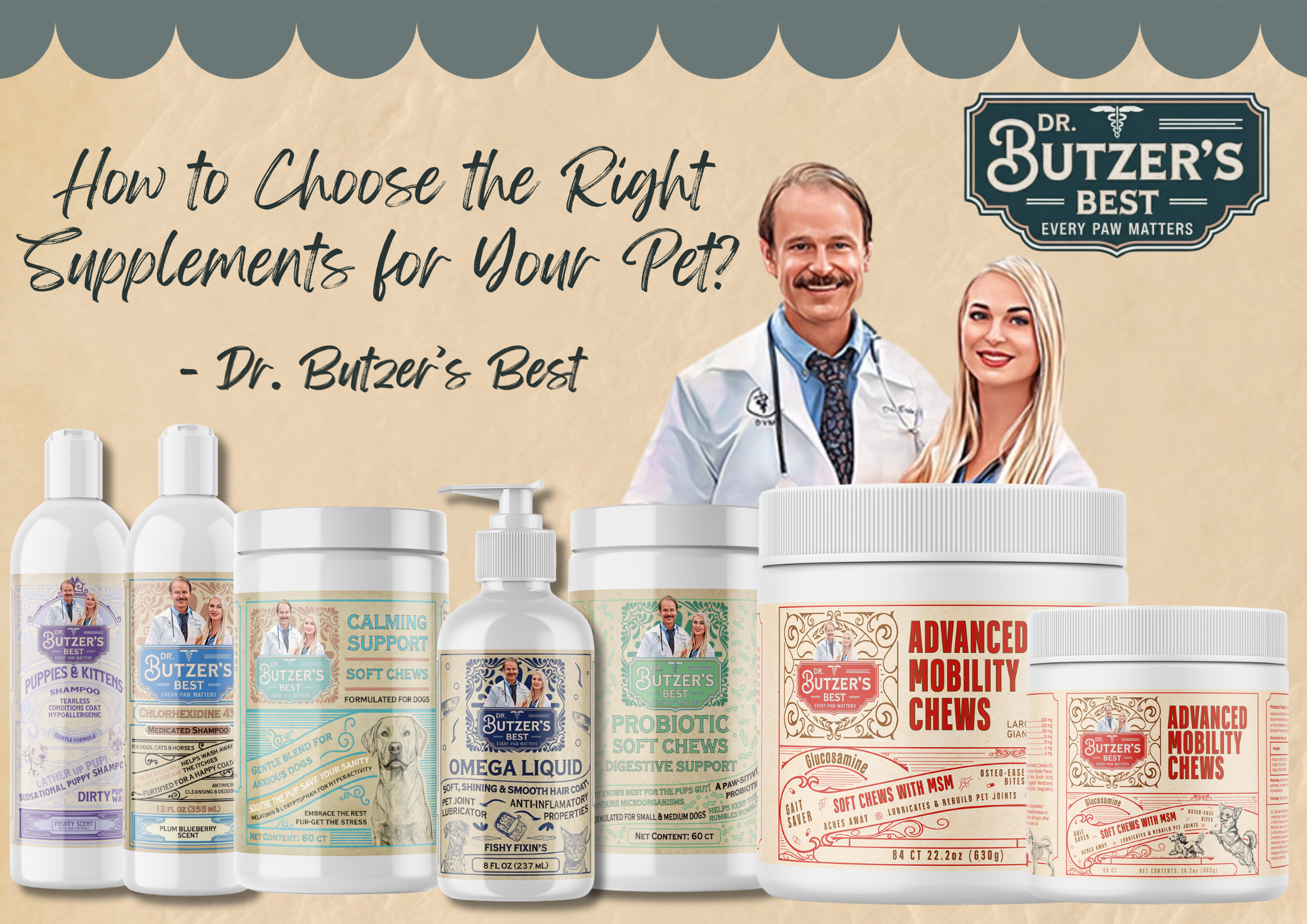
Dr. Butzer's Best offers products designed for different aspects of pet care. Depending on your dog's needs, you can explore:
Omega Liquid: Formulated for dogs and cats to help support healthy skin and coat.
Probiotic Soft Chews: Formulated for dogs over six weeks of age to support normal digestive health.
Advanced Mobility Chews: A product to explore when researching nutritional support for mobility.
Calming Support Soft Chews: Formulated for dogs to support calm behavior and relaxation.
Each product has its own intended use, ingredient list, directions, and precautions. Read the relevant product information before making a decision, and consult your veterinarian if you have questions about suitability.
Frequently asked questions
What are the best supplements for dogs?
There is no single best supplement for every dog. The right choice depends on the dog's diet, life stage, health, and specific needs. Choose a product for a clear purpose and discuss medical concerns with your veterinarian.
Should I give my dog a multivitamin every day?
Not necessarily. A dog eating an appropriate complete and balanced diet may not need a multivitamin. Ask your veterinarian before adding one, especially if your dog receives other supplements or a therapeutic diet.
Can I give my dog several supplements at once?
Combining products can create overlapping ingredients or interactions. Review the full list of supplements with your veterinarian before starting multiple products.
Are natural supplements always safe?
No. Natural ingredients can still cause side effects, interact with medication, or be unsuitable for certain animals. Safety depends on the ingredient, dose, formulation, and individual dog.
How do I know if a supplement is working?
The answer depends on its intended purpose. Ask your veterinarian which changes are meaningful to monitor and how long to evaluate the product. Do not use a supplement to delay assessment of new or worsening symptoms.
Make informed choices for your dog's wellness
Your dog doesn't need every supplement on the shelf. A thoughtful approach begins with a clear purpose, careful label reading, appropriate nutrition, and veterinary guidance when needed.
Explore the Dr. Butzer's Best shop to learn about our pet-care products and find options to discuss with your veterinarian.