
Why Is My Dog Anxious? Common Triggers and Ways to Support Calm Behavior
Dogs experience the world through sounds, smells, routines, and social interactions that can sometimes feel overwhelming. Thunderstorms, travel, unfamiliar visitors, separation, and changes at home may cause some dogs to become unsettled.
If your dog paces, whines, hides, or struggles to relax, understanding the trigger is an important first step. Although occasional stress is a normal response to unfamiliar situations, persistent or severe anxiety deserves attention.
Here's how to recognize common signs of stress, help your dog feel more comfortable, and decide whether a calming supplement may be appropriate.
How can you tell if your dog is stressed?
Dogs express stress in different ways. Some become restless and vocal, while others withdraw or try to hide.
Possible signs include:
Pacing or repeatedly changing positions.
Panting when the environment isn't hot and the dog hasn't been exercising.
Trembling or hiding.
Whining, barking, or becoming unusually clingy.
Yawning or lip-licking in situations that appear stressful.
Refusing food during a stressful event.
Attempts to escape or avoid a particular situation.
These behaviors don't always indicate anxiety. Pain and medical conditions can also change a dog's behavior. If the behavior is new, persistent, severe, or accompanied by other symptoms, consult your veterinarian.
What causes anxiety in dogs?
Understanding the trigger helps you choose an appropriate response.
Thunderstorms and loud noises
Thunder, fireworks, construction, and other sudden sounds can frighten noise-sensitive dogs. Some dogs also react to changes in the environment before a storm begins.
Travel and unfamiliar places
Car rides, boarding, hotel stays, and unfamiliar surroundings can disrupt a dog's routine. Some dogs experience motion sickness as well as stress, so travel-related symptoms may have more than one cause.
Separation and changes in routine
Dogs accustomed to company may struggle when left alone. A new work schedule, move, or household change can also affect behavior.
Separation-related distress is not simply disobedience. Dogs with significant separation anxiety may need a structured behavior plan and professional support.
Visitors and unfamiliar situations
New people, other animals, crowded environments, and changes to the household can overwhelm some dogs.
A dog's response depends on its temperament, previous experiences, health, and environment. Avoid assuming that one calming strategy will work for every animal.
How to help calm an anxious dog
Before turning to supplements, start by improving the environment and identifying what your dog needs.
1. Create a comfortable retreat
Provide a quiet, familiar place where your dog can rest without being disturbed. Some dogs prefer a covered bed or an interior room during storms.
Never force a frightened dog into a crate or enclosed space if doing so increases distress. The goal is to offer a safe, comfortable choice.
2. Keep routines predictable
Consistent feeding, walks, rest, and play can help dogs feel more secure. When a change is unavoidable, introduce it gradually whenever possible.
3. Use positive reinforcement
Reward calm behavior and gradual progress. For specific fears, a veterinarian or qualified behavior professional can recommend desensitization and counterconditioning—approaches that help dogs develop more positive associations with triggers.
Avoid punishment for fear-related behavior. It can increase distress without addressing the underlying cause.
4. Prepare for predictable events
If your dog struggles with storms or travel, prepare ahead of time. Arrange a quiet space, bring familiar bedding, and consider asking your veterinarian about a plan before the event.
If your dog becomes distressed during car rides, discuss the possibility of motion sickness rather than assuming every symptom is anxiety.
5. Know when to seek help
Contact your veterinarian if anxiety is frequent, interferes with normal life, leads to escape attempts or self-injury, or appears suddenly. Some dogs benefit from a combination of behavior modification, environmental changes, and veterinary treatment.
Do calming supplements work for dogs?
Calming supplements are designed to support relaxation, but their effects vary depending on the ingredients, formulation, and individual dog. They should not be viewed as a guaranteed solution for severe anxiety, noise phobias, or separation-related distress.
When evaluating a calming supplement, consider:
Whether the product is specifically intended for dogs.
The active ingredients and their amounts.
The product's directions and warnings.
Whether it is appropriate for your dog's age and medical history.
Potential interactions with medications or other supplements.
Ask your veterinarian before combining calming products with prescription medication or sedatives. Do not give your dog human sleep aids or anti-anxiety medication unless specifically instructed by a veterinarian.
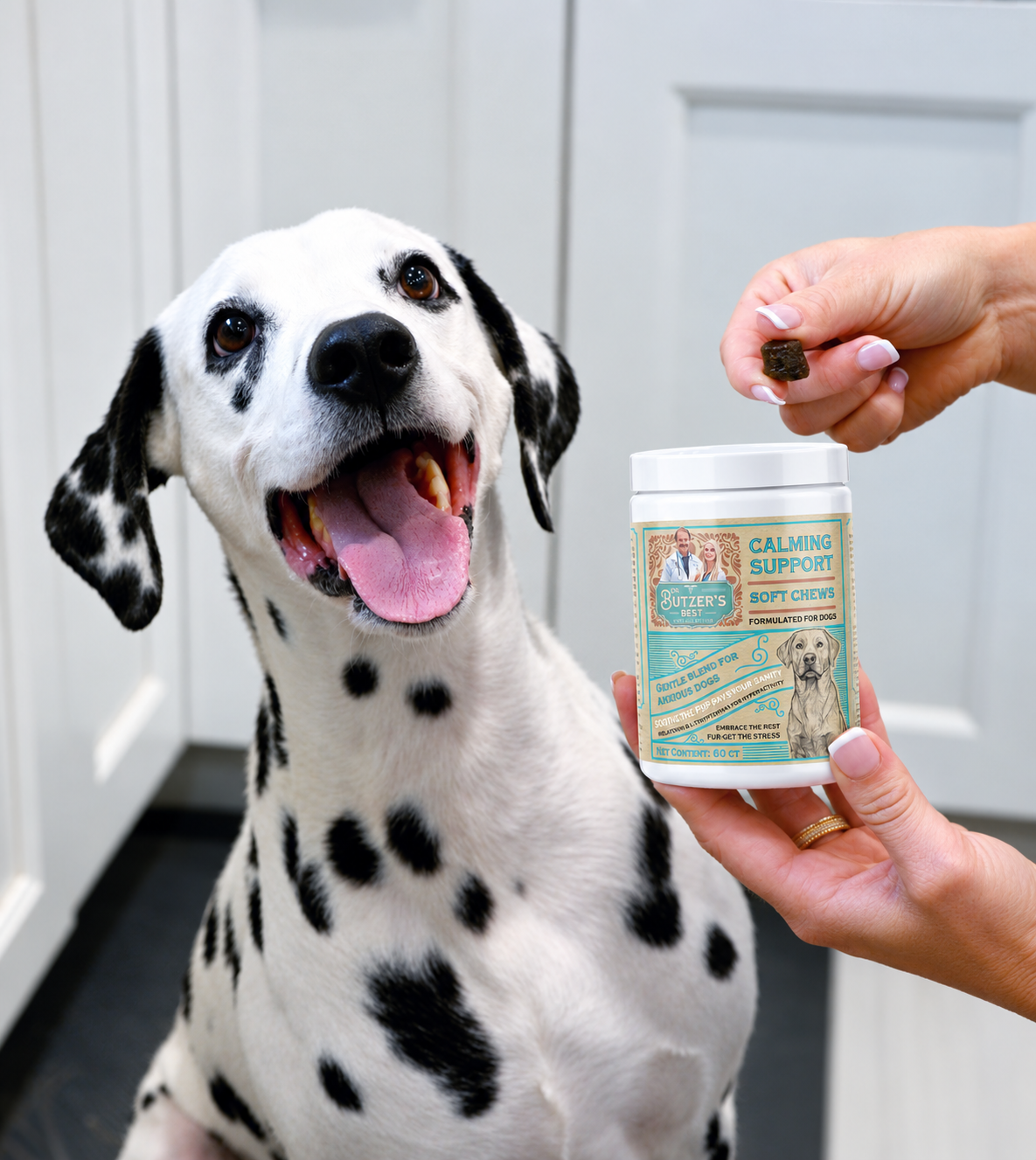
Meet Dr. Butzer's Best Calming Support Soft Chews
Dr. Butzer's Best Calming Support Soft Chews are formulated for dogs with a blend that includes chamomile, thiamine, passion flower, ginger, L-tryptophan, and melatonin.
The product is intended to support calm behavior and relaxation. Review the full label and feeding directions before use.
The label includes important precautions, including caution with sedatives and monoamine oxidase inhibitor medications. Safe use in pregnant animals or animals intended for breeding has not been established. Consult your veterinarian if your dog takes medication, has an existing condition, or is not improving.
For dogs with significant anxiety, a supplement is best considered as one possible component of a broader care plan.
Frequently asked questions
Can I give my dog calming chews before a thunderstorm?
Ask your veterinarian whether the product is suitable and how it should be used. Follow the label and plan ahead for predictable triggers rather than waiting until your dog is severely distressed.
Will calming chews stop separation anxiety?
They should not be relied upon as a standalone treatment for separation anxiety. Dogs with this condition may need a structured behavior plan and, in some cases, veterinary medication.
How do I calm my dog during a thunderstorm?
Offer a quiet retreat, close curtains if visual flashes are upsetting, reduce outside noise when possible, and remain calm. Let your dog choose whether to seek comfort or rest in its preferred space.
When should I worry about my dog's anxiety?
Seek veterinary advice when distress is persistent, severe, associated with injury or escape attempts, or accompanied by a sudden change in behavior.
Help your dog feel more secure
A calmer dog often starts with understanding the situation, making the environment more comfortable, and choosing an approach suited to the individual animal.
Explore Dr. Butzer's Best Calming Support Soft Chews and speak with your veterinarian about the best approach for your dog.