
How to Bathe a Puppy: A Step-by-Step Guide for First-Time Owners
Bringing home a puppy means learning all sorts of new routines, from feeding schedules and training to grooming and bath time. Although a bath may seem straightforward, young puppies need a gentle approach that helps them stay comfortable and makes grooming a positive experience.
The good news? With a little preparation, you can make bath time calmer, safer, and easier for both of you.
Here's how to bathe a puppy, choose an appropriate shampoo, and avoid common mistakes.
When can you give a puppy its first bath?
The right time depends on the puppy's age, health, environment, and how dirty they are. Very young puppies have difficulty regulating their body temperature, so they need extra care to avoid becoming chilled.
If your puppy is very young, unwell, or not yet fully settled into a routine, ask your veterinarian for guidance. For small messes, a warm, damp cloth may be sufficient without giving a full bath.
There is no need to bathe a puppy every day. Frequent bathing can remove natural oils and may irritate the skin, depending on the shampoo and the puppy's individual needs.
What you'll need before bath time
Gather everything first so you never have to leave your puppy unattended.
Prepare:
A shampoo specifically formulated for puppies or suitable for your puppy's age and species.
Several soft towels.
A nonslip surface or secure bathing area.
A cup or gentle sprayer for rinsing.
A soft brush, if appropriate for your puppy's coat.
Treats and praise to help create a positive experience.
Use lukewarm water rather than hot water. Keep the room comfortably warm, especially if your puppy is small or has a short coat.
How to bathe a puppy step by step
Step 1: Introduce your puppy to the bathing area
Let your puppy explore the space before turning on the water. Use a calm voice and offer praise for relaxed behavior.
For a nervous puppy, begin with short, positive experiences rather than trying to complete a full bath immediately.
Step 2: Brush the coat if needed
If your puppy's coat needs brushing, do it gently before bathing. Brushing can help remove loose hair and identify tangles that may become more difficult to manage when wet.
Never pull forcefully at mats or tangles. Seek help from a professional groomer if they're difficult to remove safely.
Step 3: Wet the coat with lukewarm water
Wet the body gradually, avoiding forceful streams of water. Keep water away from the nose and ears, and be particularly careful around the face.
A cup or gentle sprayer can help you control the flow and make the experience less startling.
Step 4: Apply puppy shampoo
Use a shampoo formulated for puppies and follow its directions. Work a small amount through the coat gently, avoiding the eyes and preventing shampoo from entering the ears or mouth.
Don't use human shampoo, dish soap, or medicated products unless your veterinarian specifically recommends them. Puppies have different skin needs from people, and some products may be too harsh or inappropriate.
Step 5: Rinse thoroughly
Rinse until the coat is free of shampoo residue. Remaining product may irritate the skin, so pay attention to areas where shampoo can collect, such as the belly, legs, and under the tail.
Step 6: Clean the face carefully
Use a soft, damp cloth around the face rather than pouring water over the head. Follow the product's directions, and keep shampoo out of the eyes.
If your puppy develops eye redness or irritation, stop using the product and contact your veterinarian if symptoms persist or appear significant.
Step 7: Dry your puppy completely and comfortably
Gently towel-dry the coat and keep your puppy warm until dry. Avoid rough rubbing, which can tangle or irritate the coat.
If you use a blow dryer, use a pet-safe, low-heat setting only if your puppy tolerates it, keep the airflow moving, and avoid directing hot air at the skin. Never leave a wet young puppy in a cold environment.
Step 8: End with praise
Reward your puppy for calm behavior. A pleasant ending can help make future grooming sessions easier.
How often should you bathe a puppy?
There is no single schedule that works for every puppy. Bathing frequency depends on the breed, coat type, activity level, skin condition, and how dirty the puppy becomes.
For many puppies, baths are needed only when they are dirty or have developed an odor. Your veterinarian or groomer can help you establish a suitable routine.
If your puppy has recurring skin problems, don't simply bathe more often. Ask your veterinarian whether the symptoms could be caused by parasites, allergies, infection, or another condition.
What shampoo should you use on a puppy?
Look for a product labeled for puppies or young animals and follow the age and species directions carefully.
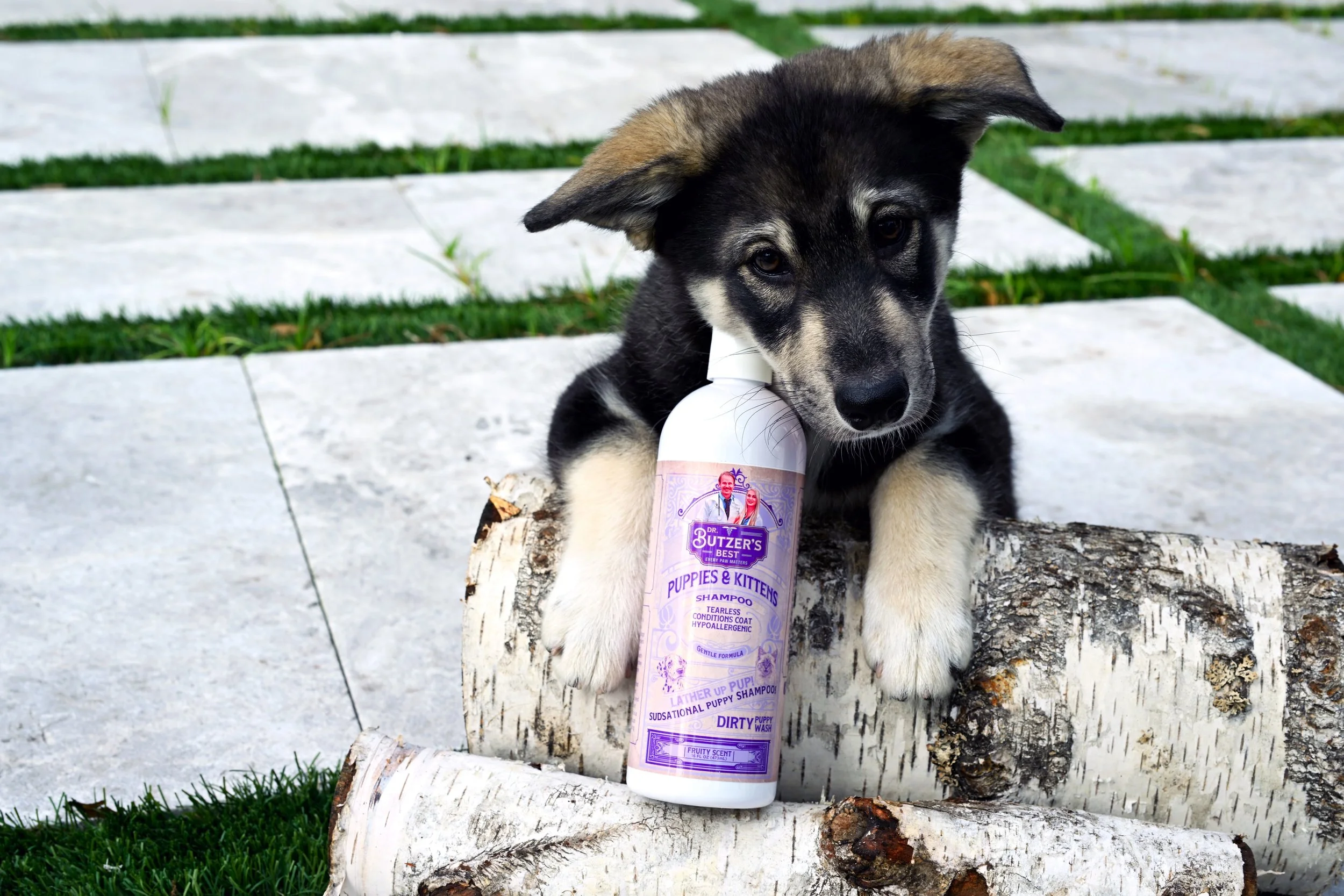
Dr. Butzer's Best Tearless Puppy Shampoo is a gentle cleansing and conditioning formula designed for puppies and kittens. The product description notes that it can be used on the face and on young animals.
Always avoid direct contact with the eyes, as directed on the product label. "Tearless" should not be taken to mean that shampoo is safe to get into the eyes.
If your puppy has a diagnosed skin condition, ask your veterinarian whether a regular grooming shampoo or a specific medicated product is appropriate.
Common puppy bathing mistakes to avoid
Using water that's too hot or too cold.
Leaving a puppy unattended in the bath.
Getting water or shampoo into the eyes or ears.
Using human shampoo or unapproved household products.
Failing to rinse the coat thoroughly.
Bathing too frequently without considering skin condition.
Forcing a frightened puppy through a long bathing session.
Patience and preparation can make a big difference.
Frequently asked questions
Can I use regular dog shampoo on a puppy?
Check the product's age guidance. Not every adult dog shampoo is appropriate for young puppies. Choose a formula intended for your puppy's age and ask your veterinarian if you're unsure.
Can I bathe my puppy if it has fleas?
Speak with your veterinarian about an age-appropriate flea treatment. Some products are unsuitable for very young puppies, and a bath alone may not resolve an infestation.
Should I clean my puppy's ears during a bath?
Avoid pouring water into the ears. If the ears need cleaning, use a product recommended by your veterinarian and follow its instructions.
What if my puppy is scared of baths?
Introduce the bathing area gradually, use treats and praise, and keep sessions short. If your puppy becomes very distressed, stop and try a slower approach another time.
Make grooming a positive part of puppy care
Your puppy is learning how the world works, and grooming is one more opportunity to build trust. Gentle handling, appropriate products, and a calm routine can help make bath time easier as your puppy grows.
Discover Dr. Butzer's Best Tearless Puppy Shampoo and explore our pet-care collection.