
Fish Oil for Dogs: What Are the Benefits of Omega-3 Fatty Acids?
A shiny coat and healthy-looking skin are often signs that a dog is receiving attentive care. Nutrition plays an important role in maintaining both, which is why many pet parents are curious about fish oil and omega-3 fatty acids.
But what exactly does fish oil do for dogs? Is every omega supplement the same, and how do you know whether your dog needs one?
Let's explore the basics of omega-3 fatty acids, what to look for in a supplement, and how they can fit into a thoughtful pet wellness routine.
What is fish oil for dogs?
Fish oil is a source of fats that can provide omega-3 fatty acids. Two important long-chain omega-3s are:
EPA (eicosapentaenoic acid): An omega-3 fatty acid involved in processes throughout the body, including inflammatory pathways.
DHA (docosahexaenoic acid): An omega-3 fatty acid important in normal brain and eye function, particularly during development.
The amount of EPA and DHA varies between products. That's why reading the label is more useful than choosing a supplement based only on the words "fish oil" or "omega."
What are the benefits of omega-3 for dogs?
Omega-3 fatty acids have several roles in canine nutrition. Their potential benefits depend on the dog's diet, health, the amount provided, and the formulation.
1. Supporting healthy skin and coat
Omega fatty acids contribute to normal skin function and coat condition. When a dog's diet provides appropriate nutrition, skin and coat health can benefit.
A supplement may be worth discussing if your dog needs additional nutritional support. However, dry, flaky, irritated, or itchy skin can have many causes, including parasites, allergies, infections, and other medical conditions. Fish oil should not be used as a substitute for identifying the cause.
2. Supporting normal inflammatory processes
EPA and DHA participate in the body's inflammatory pathways. Certain omega-3 formulations are used as part of veterinary nutritional plans for specific health concerns, including some joint conditions.
The dose and formulation matter. A general skin-and-coat supplement shouldn't automatically be considered equivalent to a veterinary product designed for a particular condition.
3. Contributing to overall nutritional balance
Fatty acids are part of a balanced diet. Whether a dog needs additional omega-3s depends on the food they eat, their life stage, health status, and any specific nutritional goals.
More isn't always better. Excessive supplementation can add calories and may cause digestive upset or other problems.
How do you choose a fish oil supplement for dogs?
With so many products available, it helps to compare more than the front of the bottle.
Check the EPA and DHA amounts
Look for the quantity of EPA and DHA per serving. The total amount of fish oil alone doesn't tell you how much of each fatty acid the product supplies.
Read the full ingredient list
Check for additional vitamins, oils, and other ingredients. If your dog already receives supplements or eats a specially formulated diet, your veterinarian can help determine whether adding another source is appropriate.
Choose a product intended for your pet
Use a supplement specifically labeled for the intended species. Cats and dogs have different nutritional needs, and products should be used according to their labels.
Consider quality and storage
Ask the manufacturer about quality controls and follow the storage instructions. Fish oils can oxidize, so proper handling matters.
Can you give your dog fish oil every day?
Some products are designed for daily use, but the correct amount depends on the dog's weight, diet, health, and the concentration of the supplement.
Before starting fish oil, ask your veterinarian about the appropriate dose—especially if your dog has an existing medical condition, takes medication, or is already receiving a diet enriched with omega-3s.
Follow the product's directions rather than estimating a dose from another brand's label.
What if your dog has dry or itchy skin?
It's tempting to reach for a skin-and-coat supplement when you notice scratching or flakes. However, persistent itching may be associated with allergies, fleas, mites, bacterial or yeast overgrowth, or other conditions.
Speak with your veterinarian if your dog develops recurring itching, hair loss, redness, sores, an unpleasant skin odor, or repeated ear problems.
You can also read our related Doctor's Journal article, What Can I Give My Dog for Dry Skin?, for more information about possible causes and care options.
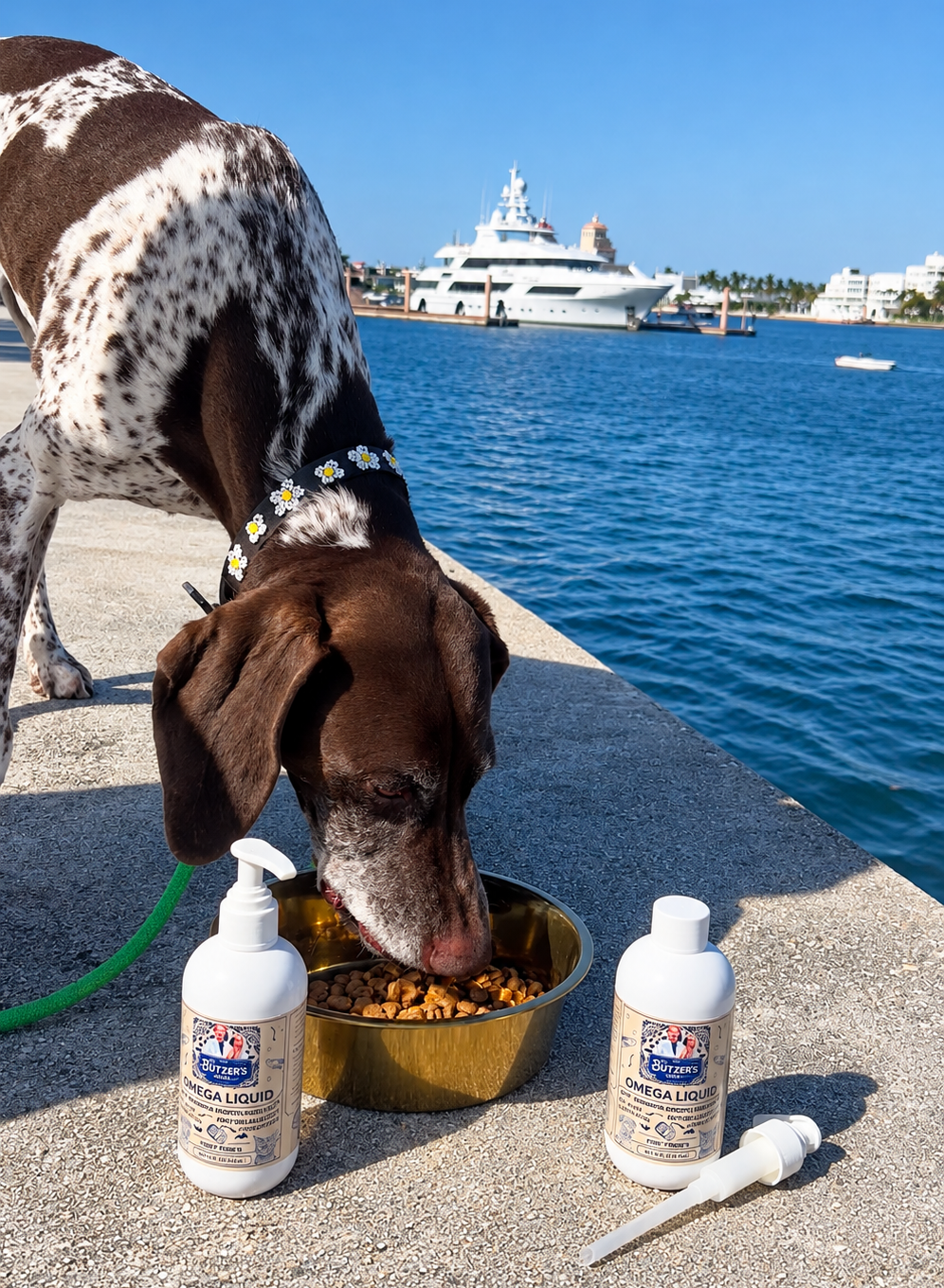
Explore Dr. Butzer's Best Omega Liquid
Dr. Butzer's Best Omega Liquid is formulated for dogs and cats and provides fish oil, vitamins, antioxidants, and essential fatty acids to help support healthy skin and coat.
The product page lists EPA and DHA among its guaranteed components. Review the current label, feeding directions, and ingredient information before use.
If you're considering adding omega-3s to your pet's routine, your veterinarian can help you decide whether the product is suitable and how it fits with your pet's existing diet.
Frequently asked questions
Is fish oil good for a dog's coat?
Omega-3 fatty acids contribute to normal skin function and coat condition. The benefit of supplementation depends on the dog's nutritional needs and the amount and formulation provided.
How long does fish oil take to work?
There is no universal timeline. Results depend on the reason for supplementation, the dog's condition, and the product used. Ask your veterinarian what changes to monitor and when to reassess.
Can dogs get too much fish oil?
Yes. Excessive supplementation can contribute to digestive problems, excess calorie intake, and other concerns. Some dogs may also need special precautions. Follow veterinary guidance.
Can cats use dog fish oil?
Don't assume that a dog product is automatically appropriate for a cat. Dr. Butzer's Best Omega Liquid is labeled for both dogs and cats; follow its specific directions for the intended animal.
A simple step toward informed pet nutrition
Omega-3 fatty acids can be an important part of a dog's nutritional picture, but the best approach begins with understanding the individual animal. Review your dog's diet, check supplement labels, and consult your veterinarian when you have questions.
Explore Dr. Butzer's Best Omega Liquid for skin-and-coat nutritional support.